

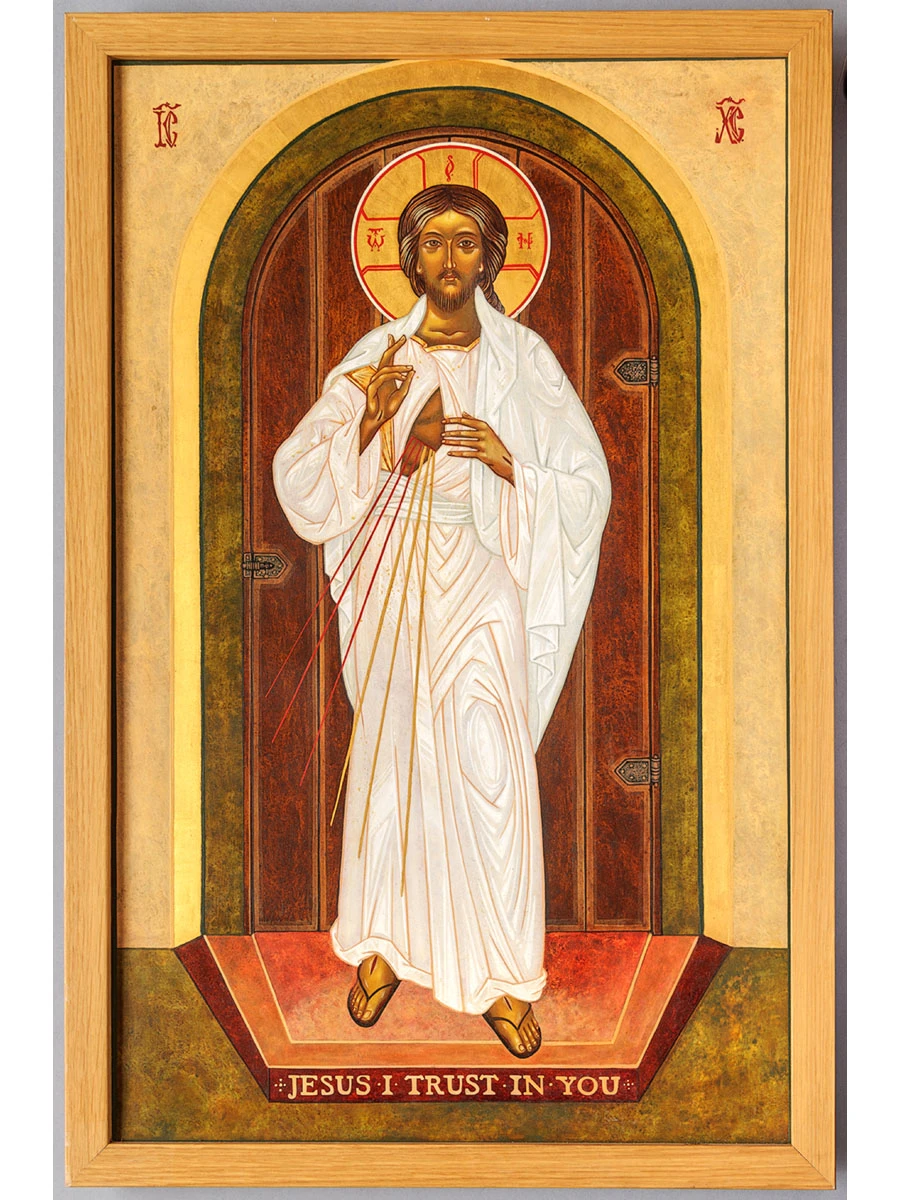
About Iconography
History
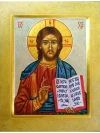
Within tradition the first icon was made by Christ when he wiped his face on a piece of linen leaving the image of his face that was given to King Abgar V to cure his leprosy.
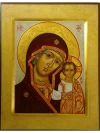
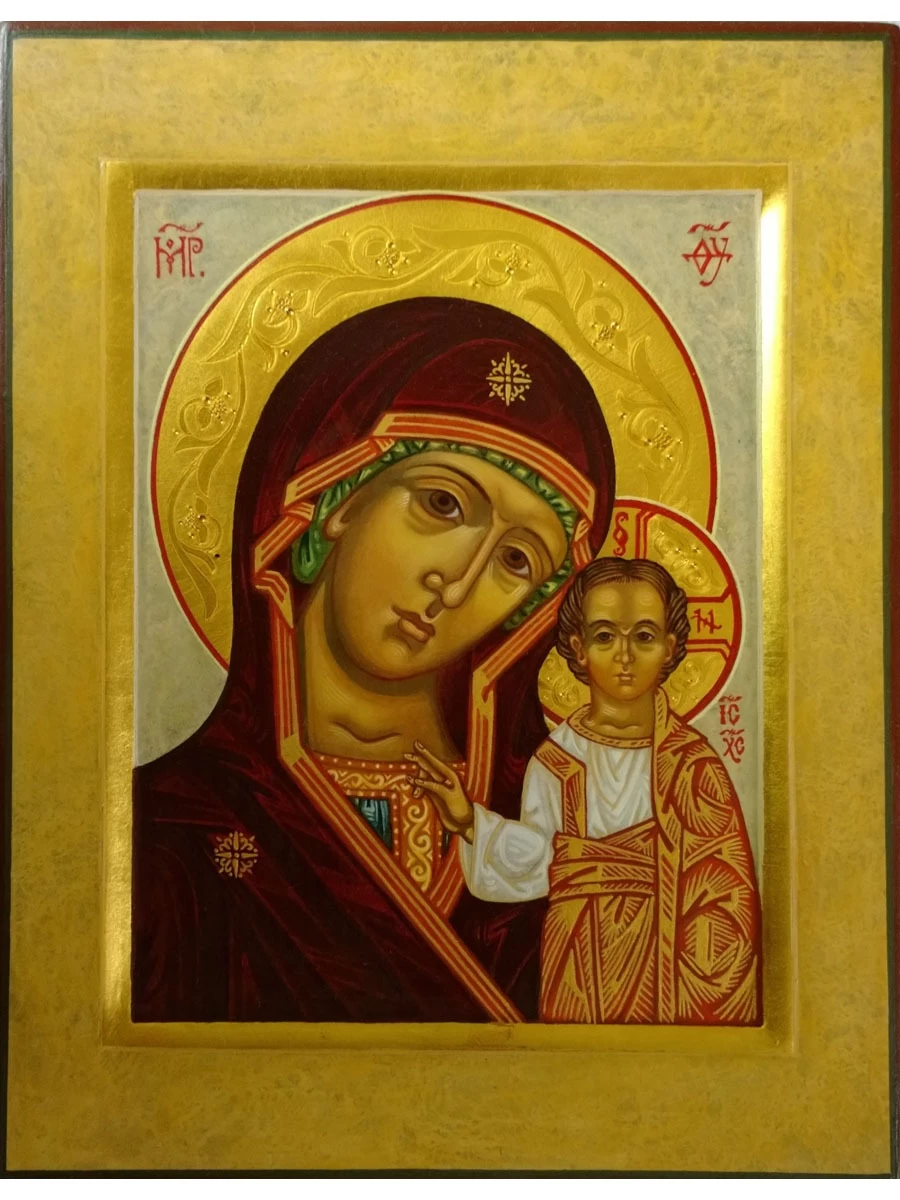
Later St. Luke painted Theotokos holding the Christ Child. Before this Christians had used symbols to profess their faith, such as a shepherd separating their flocks (Christ sorting out the good from evil), Dove (Holy Spirit), and Peacocks (The Resurrection), as seen in the catacombs during the times of persecution.
Because of such realism in the early portraits of the Saints the iconoclasts destroyed them.
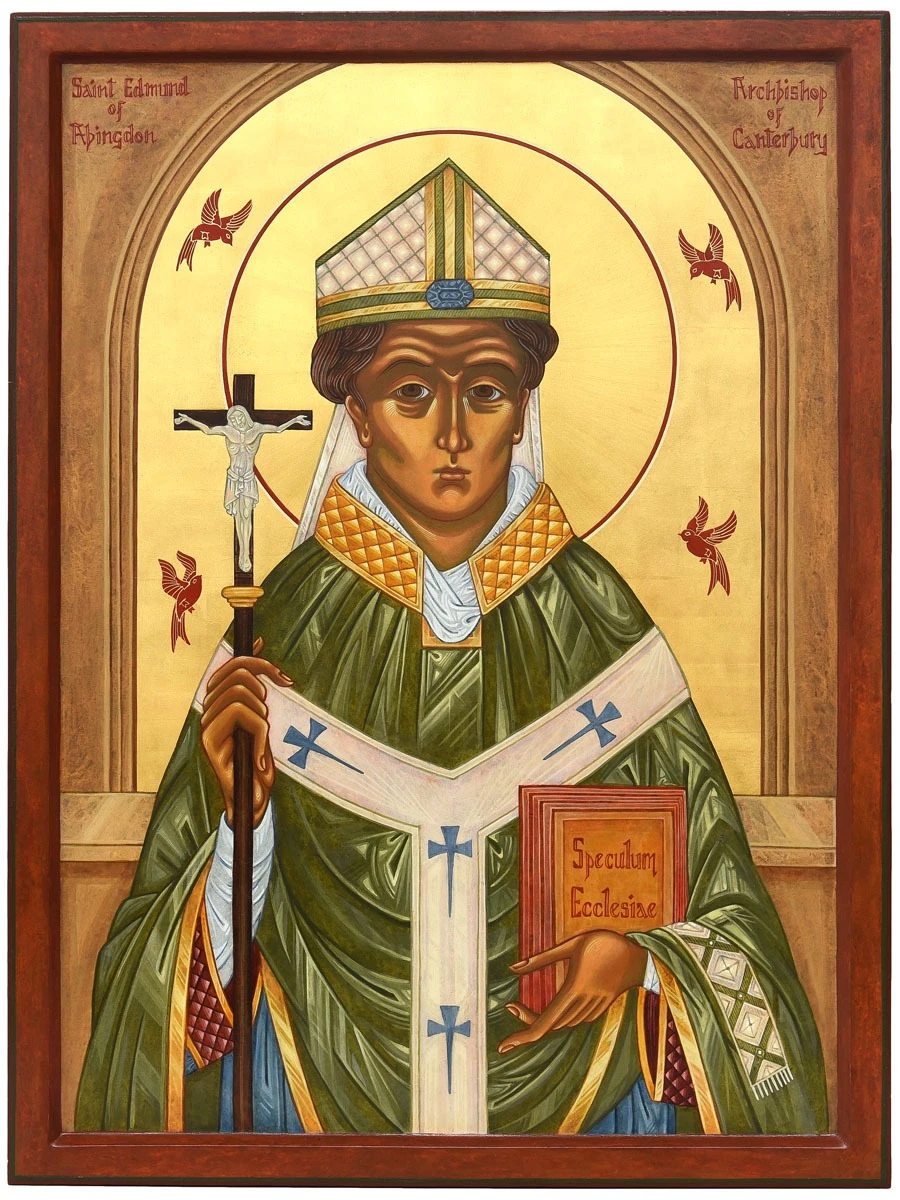
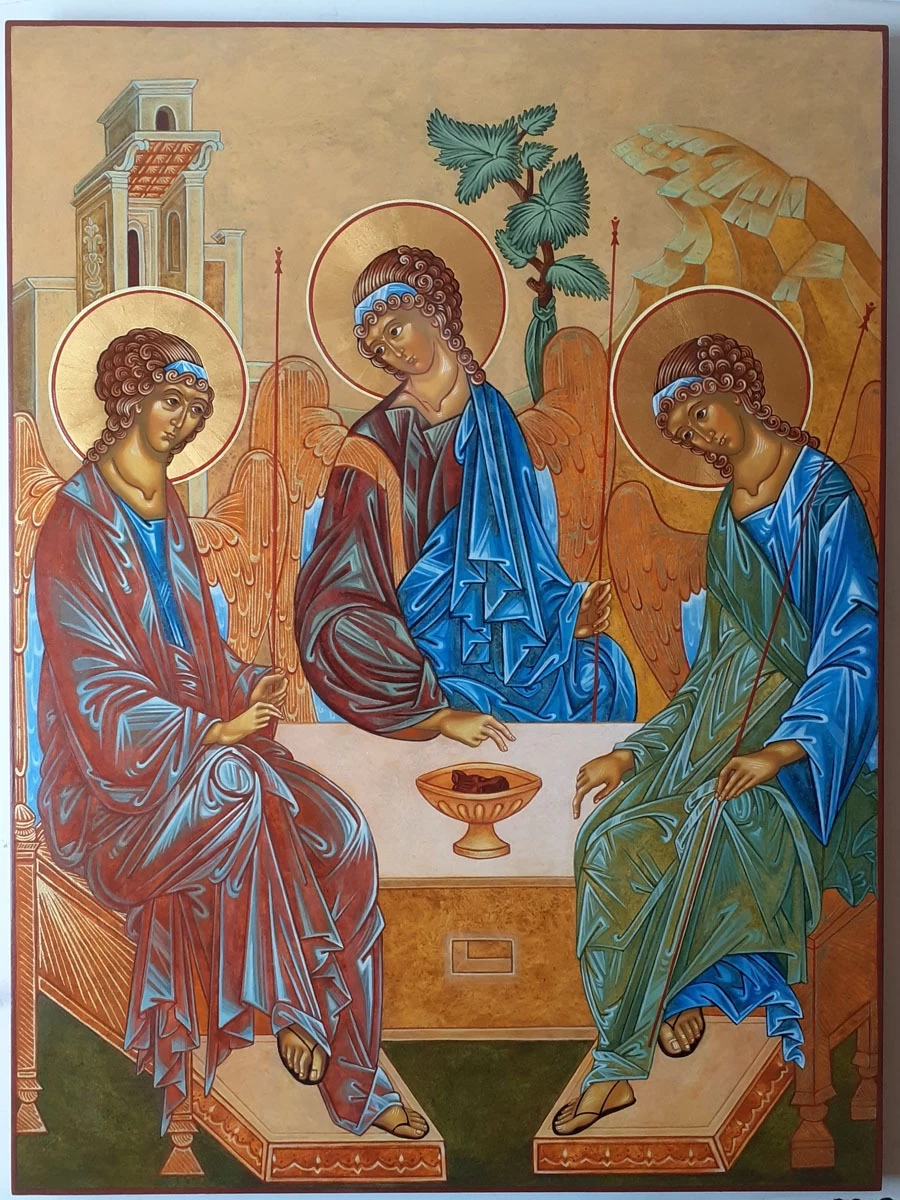
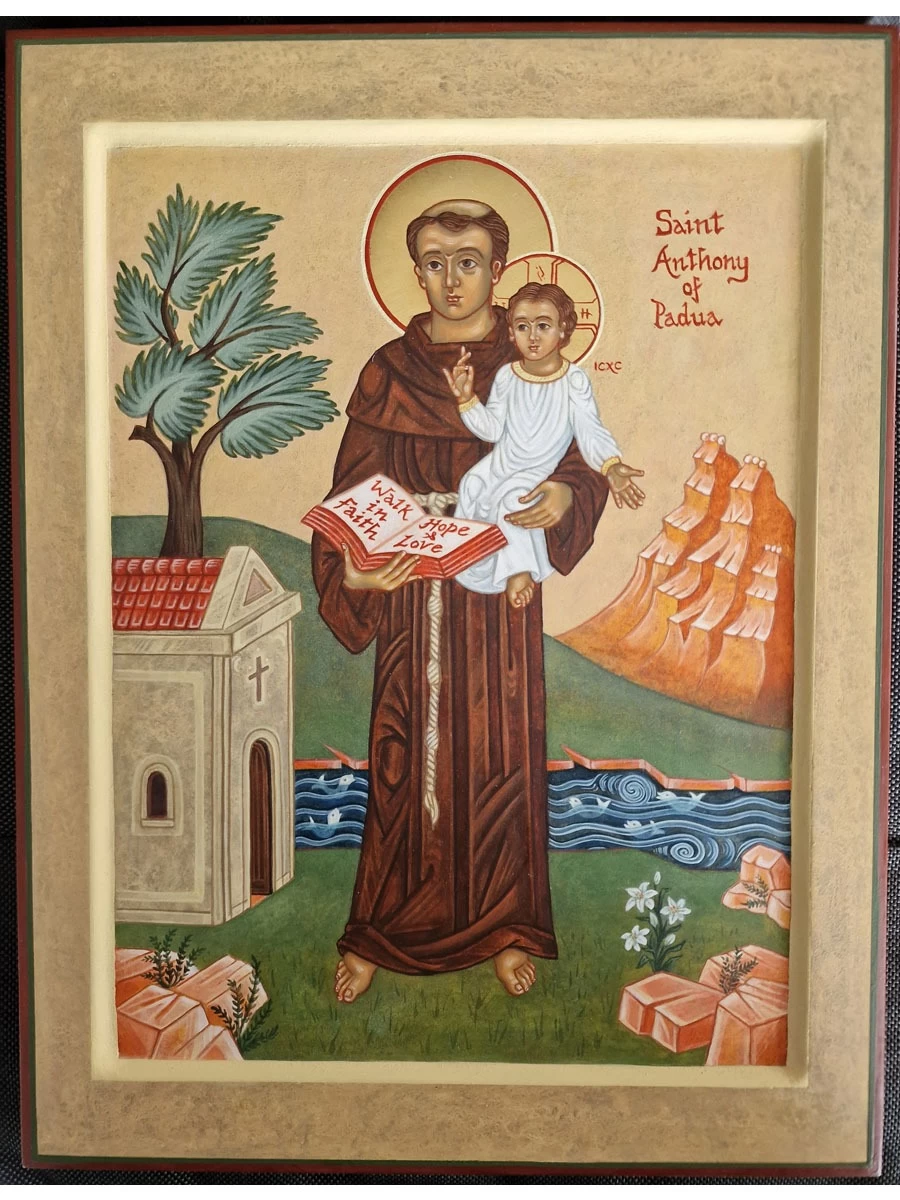
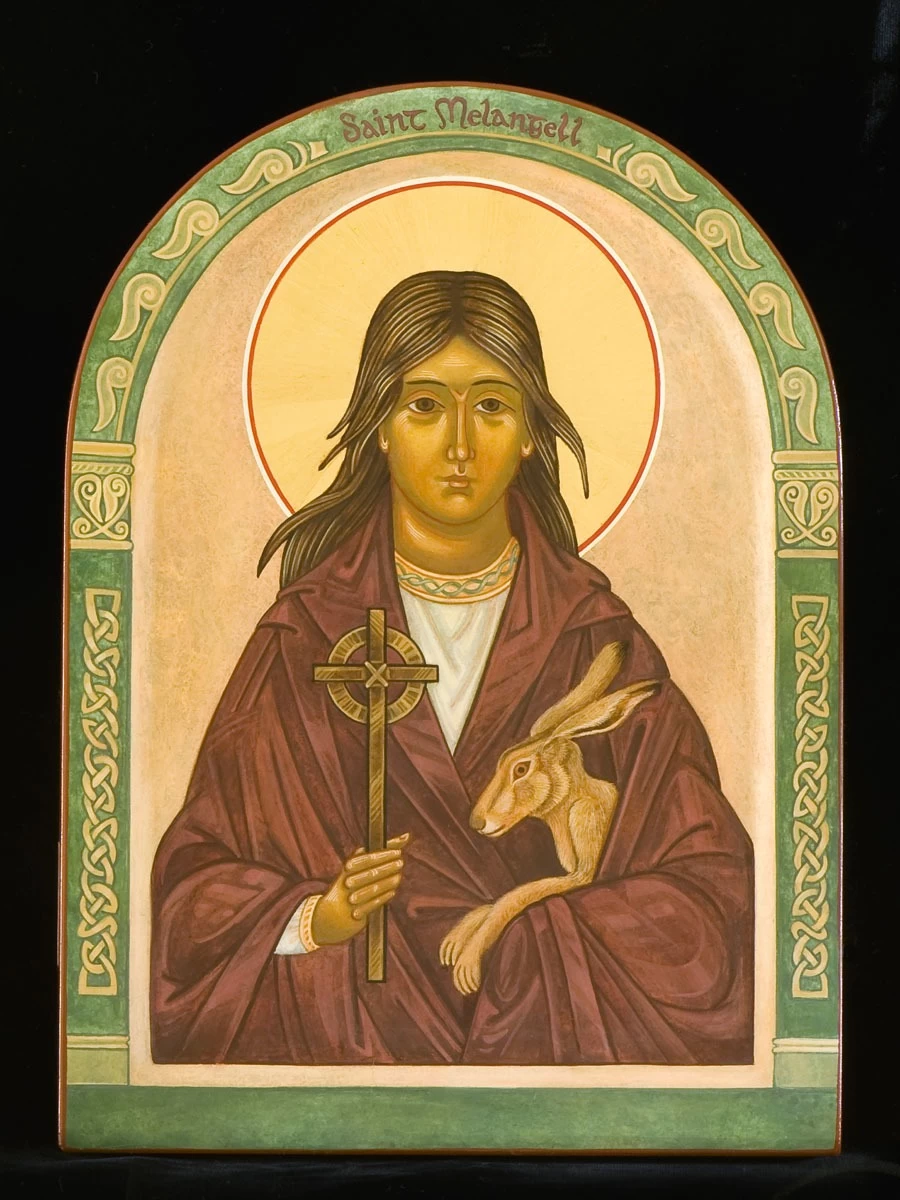
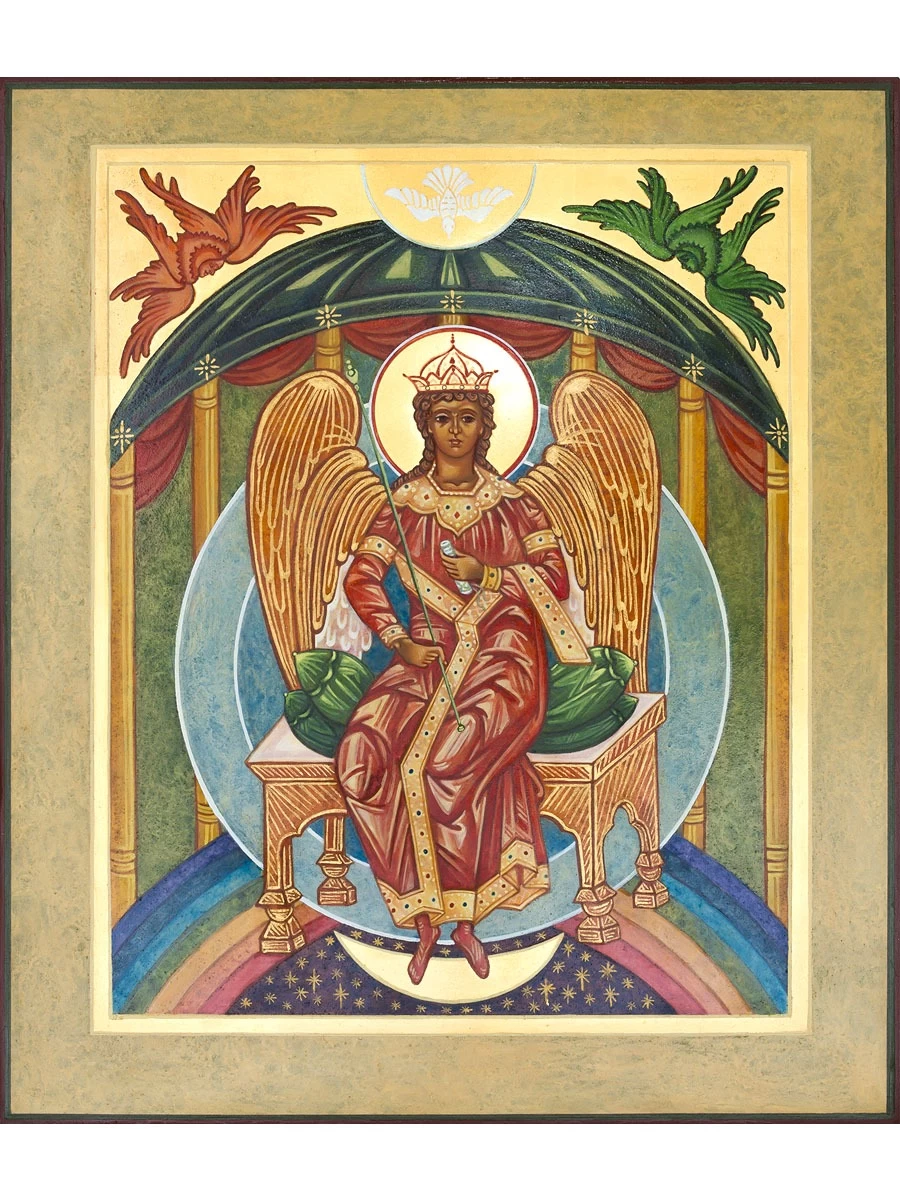
After this a stylized form of painting was introduced, using anagogical facial expressions, reverse perspective, stylised construction and landscapes, and imbued with symbolism, making the icons more mystical and transcendent.
Today icons are an integral part of traditional Christian devotional life.
They are given as gifts for baptisms, christenings, birthdays and weddings as they can be passed on from one generation to another.
Purpose
'The Word was made Flesh and dwelt amongst us’
Icons affirm that God is manifest so that we can share fellowship with him.
Icons have two roles. Firstly they are devotional enabling one to concentrate on good thoughts, prayers and deeds.
Secondly they are educational. They celebrate a Saints life, showing us the way to live a good life. Also they inform the people which service is being celebrated within the church calendar, which was important in times of mass illiteracy.
Technique
There are two main styles of painting icons - the Greek brush stroke and the Byzantine Float Techniques. The first uses a cross hatching method of painting, like drawing. Annie uses the second where one uses glazes over highlights to create a luminous transfigured feel to the image.
The materials used are egg yolk mixed with dry pigments of natural earth ochres, minerals and precious stones such as Lapis Lazuli, Malachite and Azurite, painted on a white gessoed wood panel.
Real gold leaf is used for the ‘sky’ of Divine light and Halos as this cannot be destroyed, and is therefore eternal.
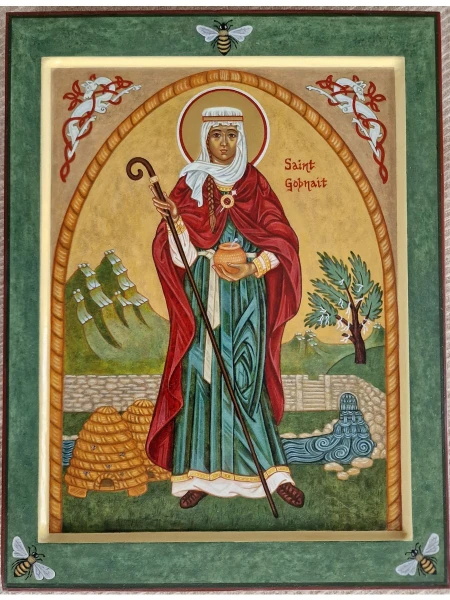
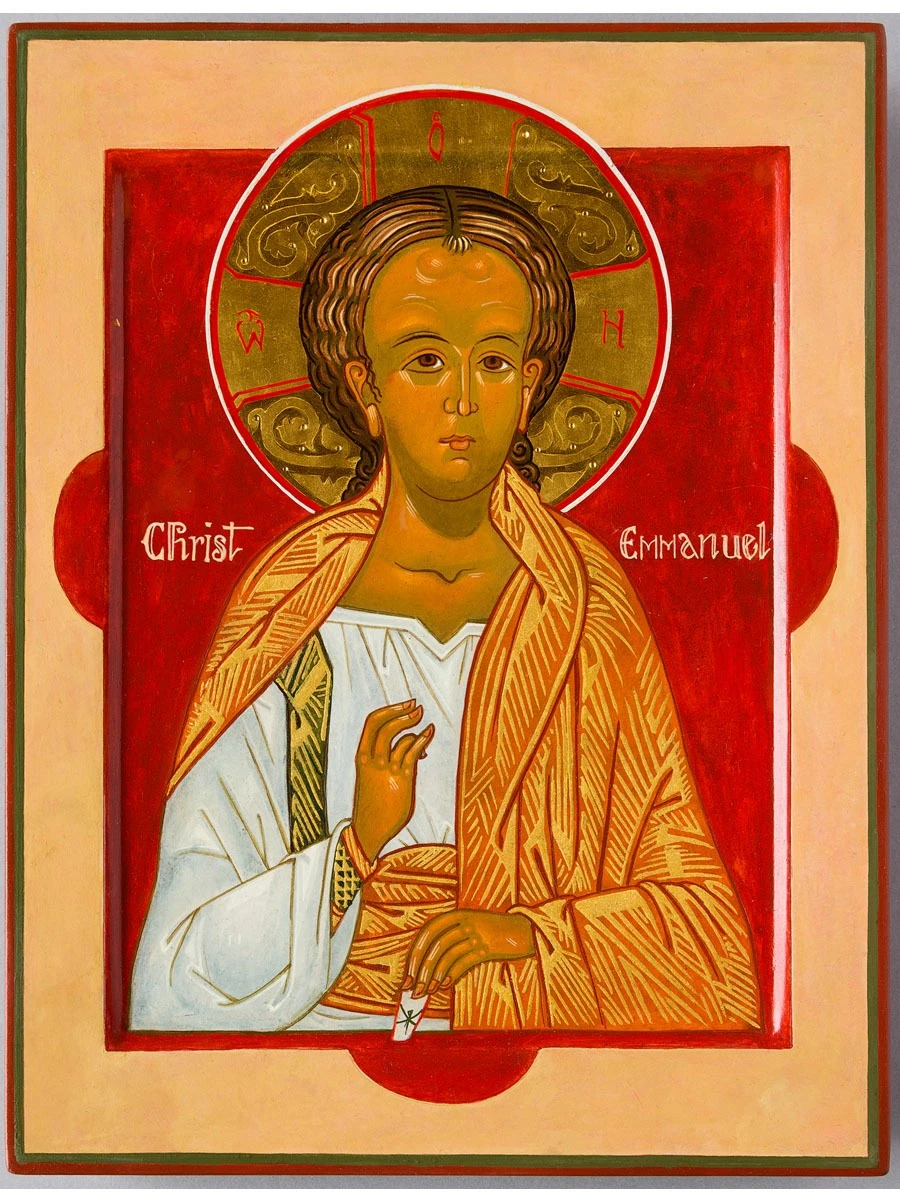
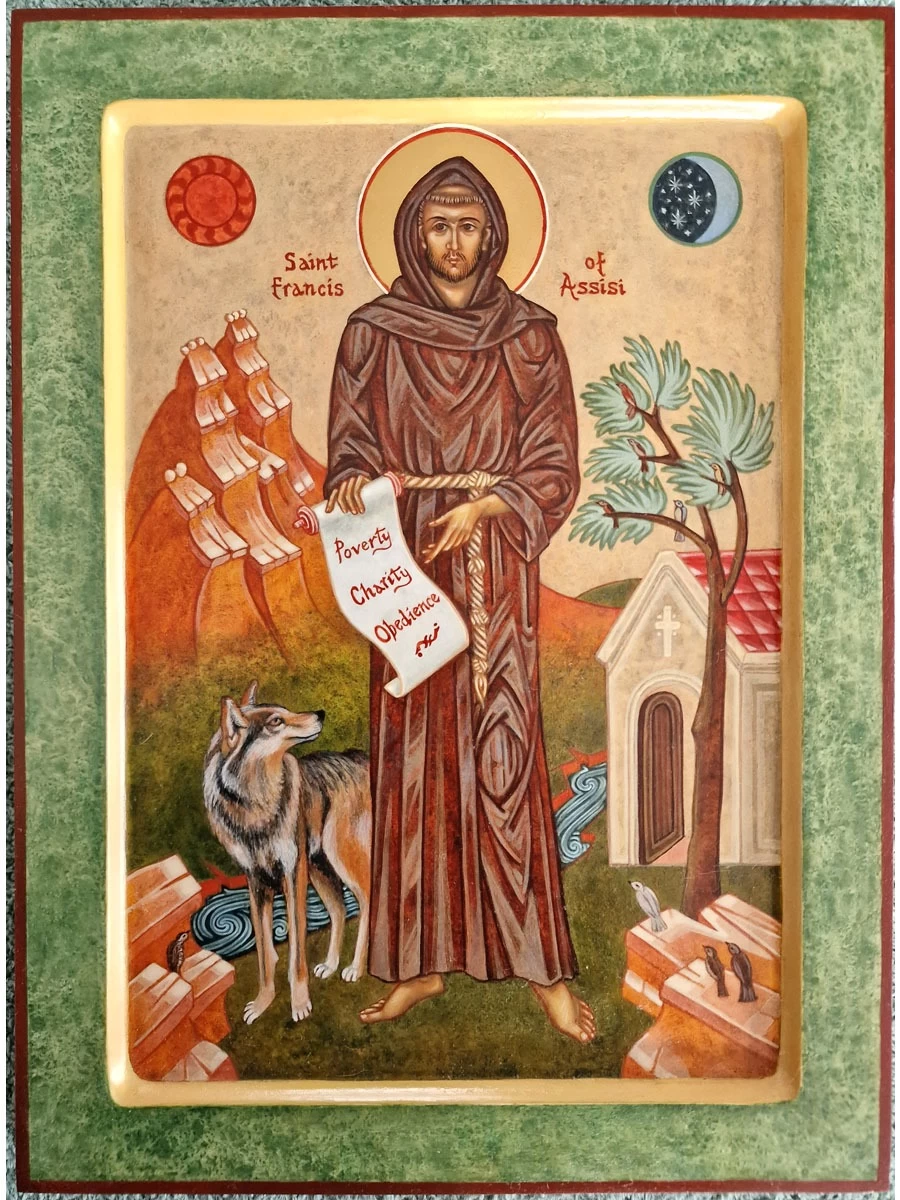
Every stage of painting the icon is symbolic. The wood panel represents the tree of life, the cross and the bible, with the red sides symbolising the Old Testament, the recessed centre is the window into Heaven - the New Testament.
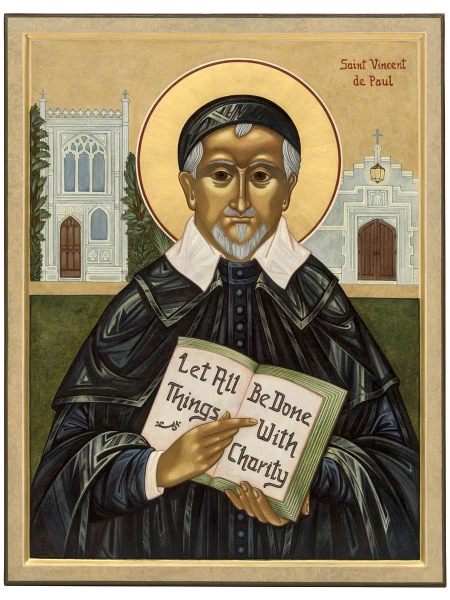
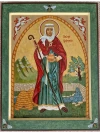
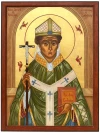
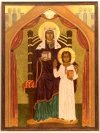
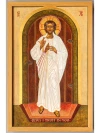
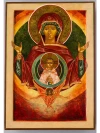
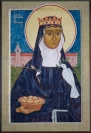
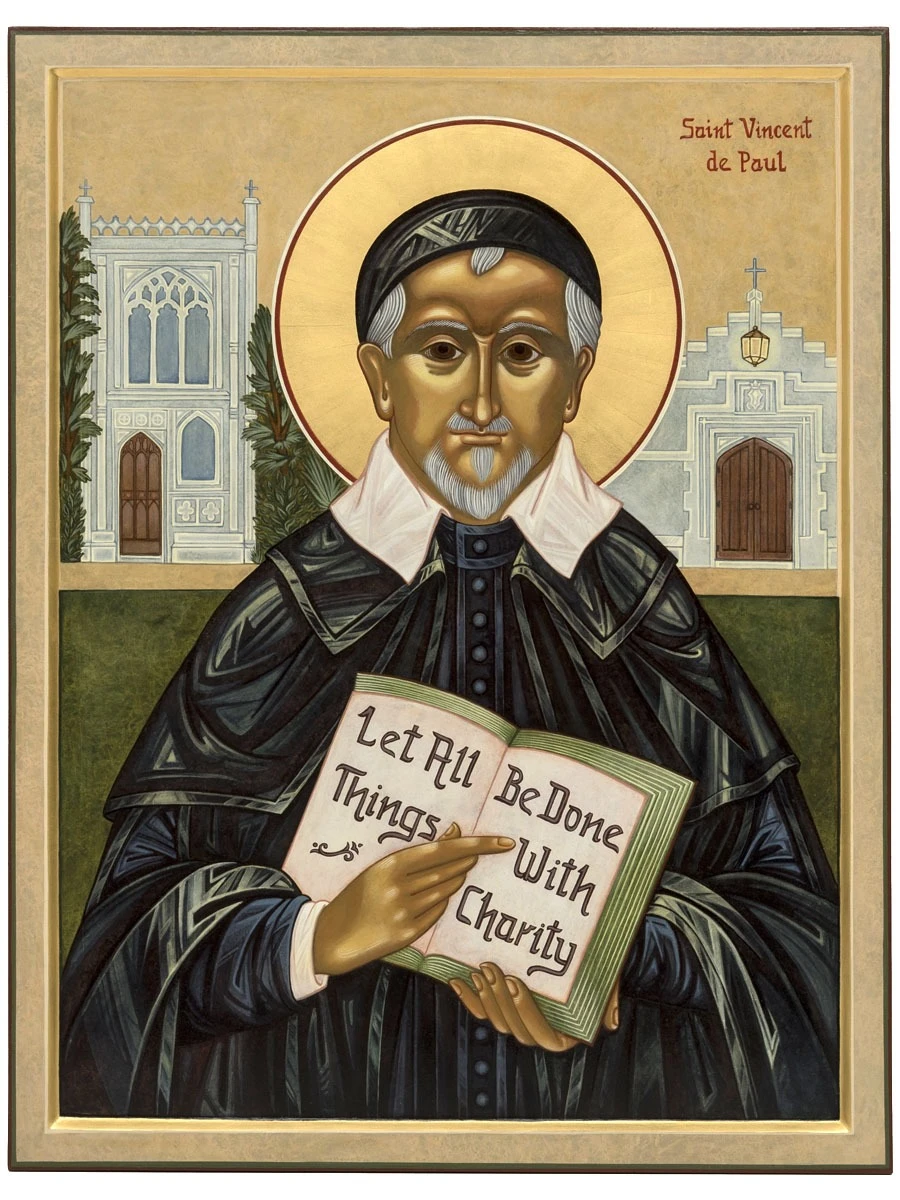
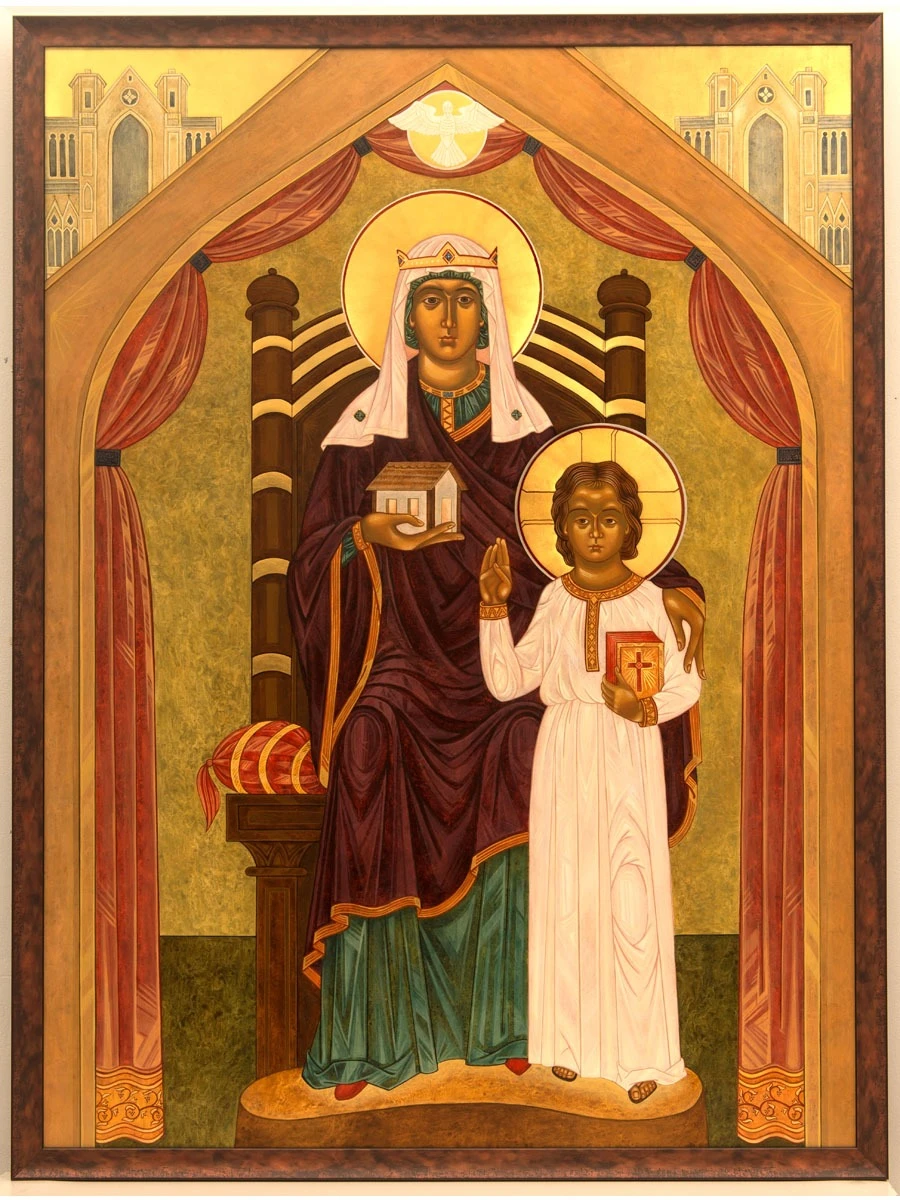
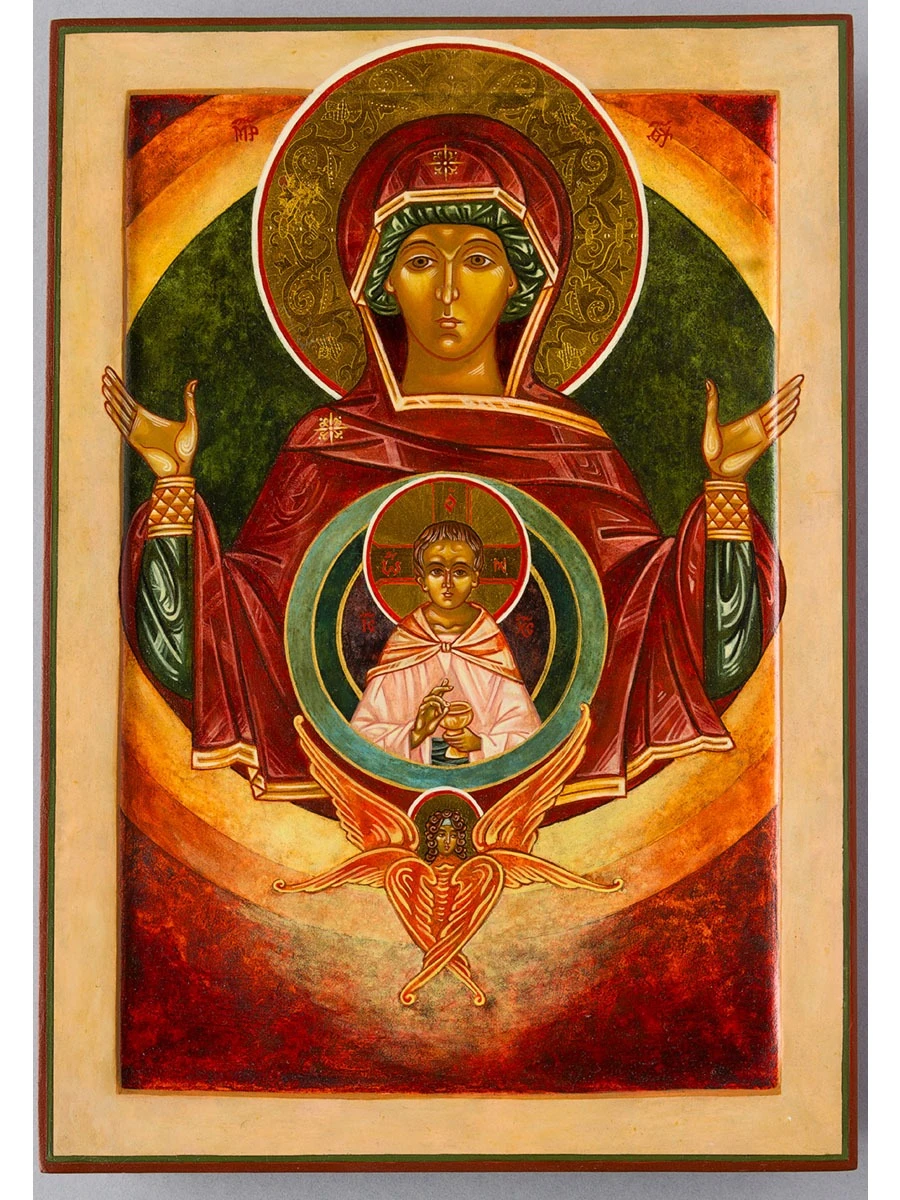
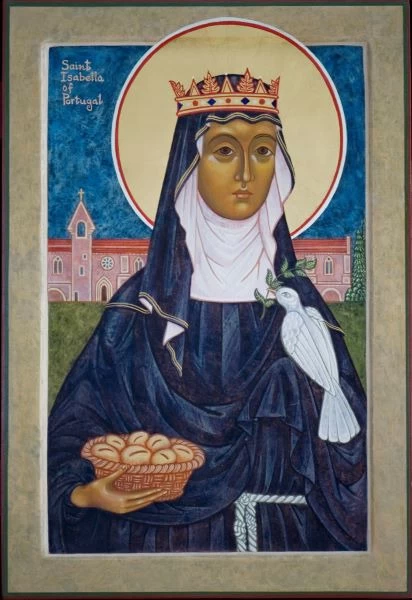
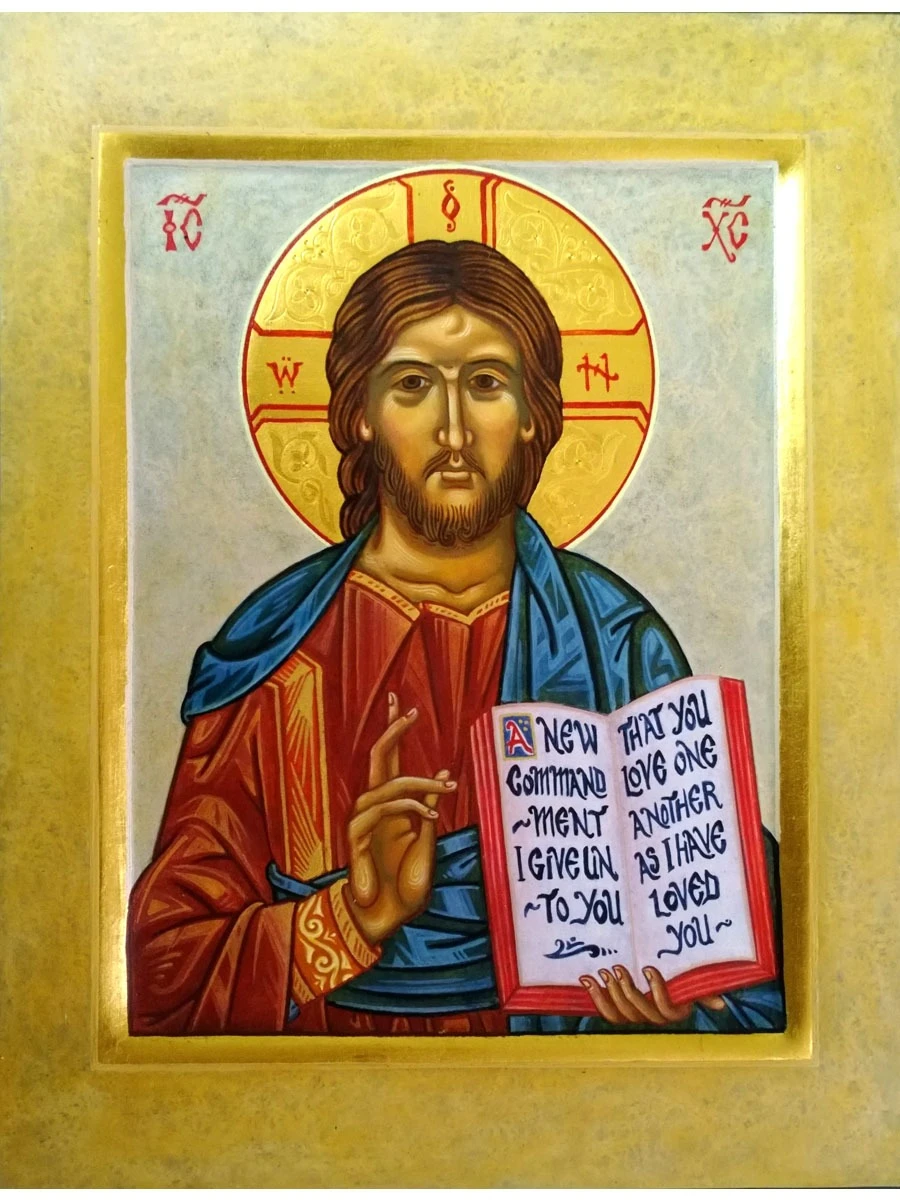
All the colours are symbolic. Deep purple red is high status and earthly as seen on Theotokos outer garment, her inner dress being the blue of Heaven, and her wimple the green blue of the Holy Spirit. Christ is reversed as he shows his heavenly aspect on the outside and earthy one as his inner tunic. Blacks and Browns are for monastics who have given up earthly pleasures.
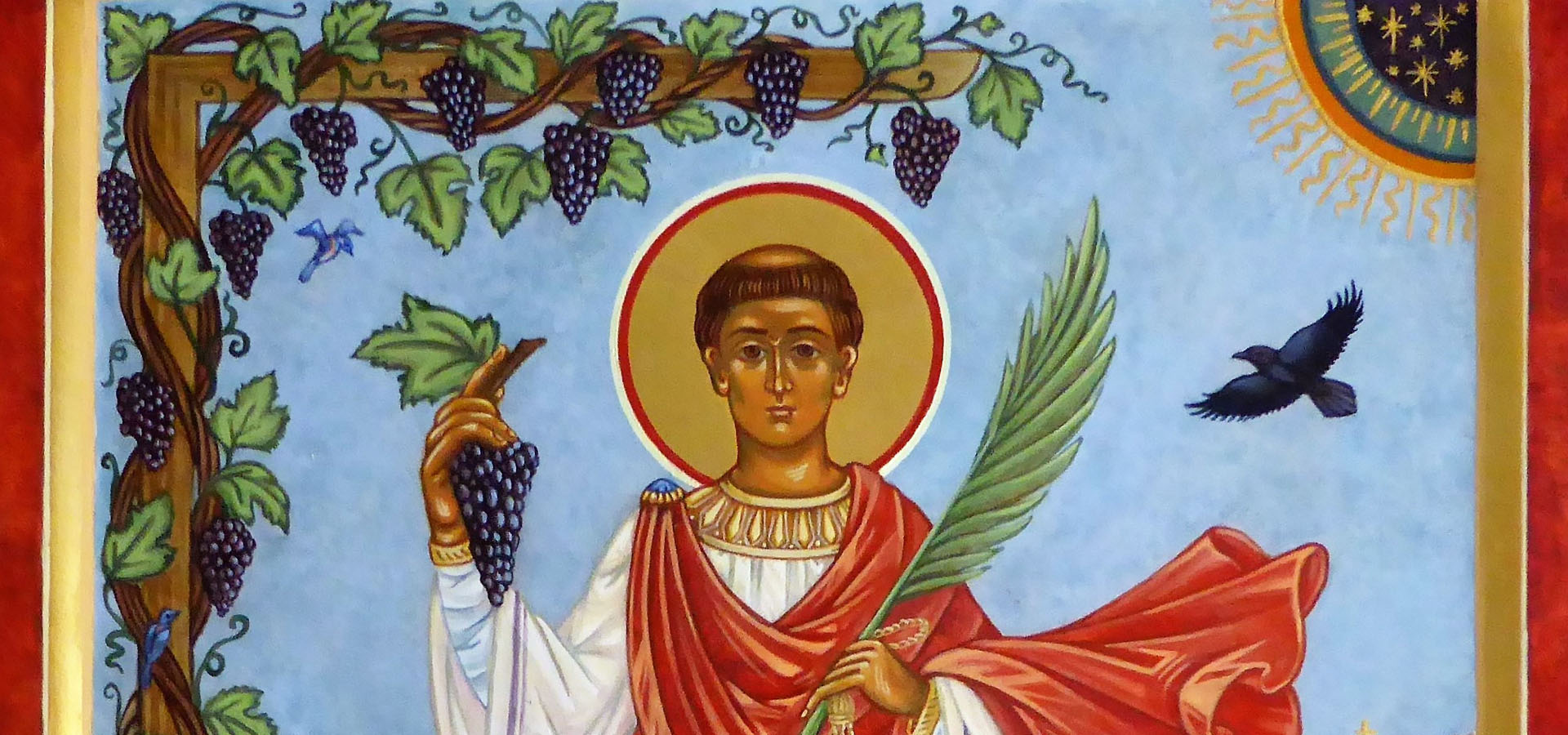
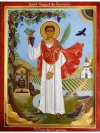
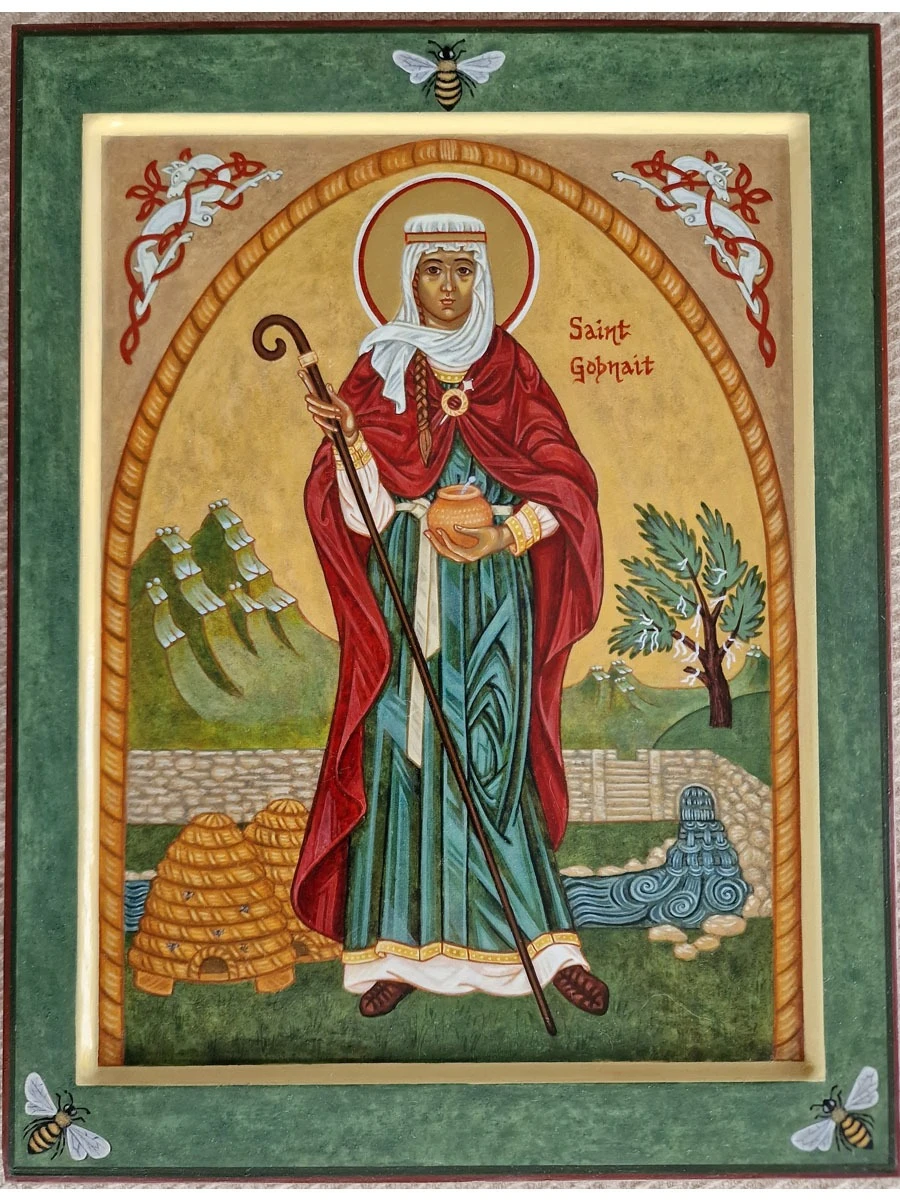
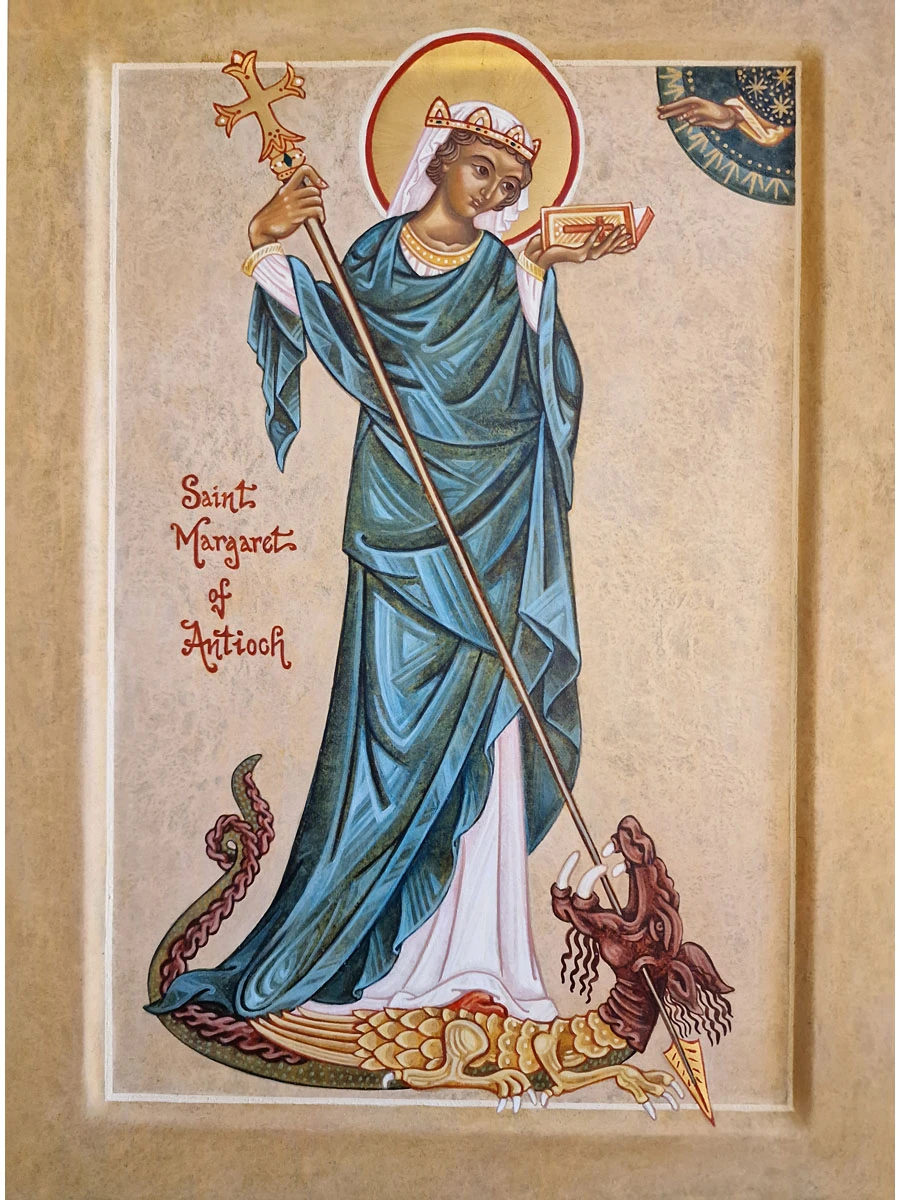
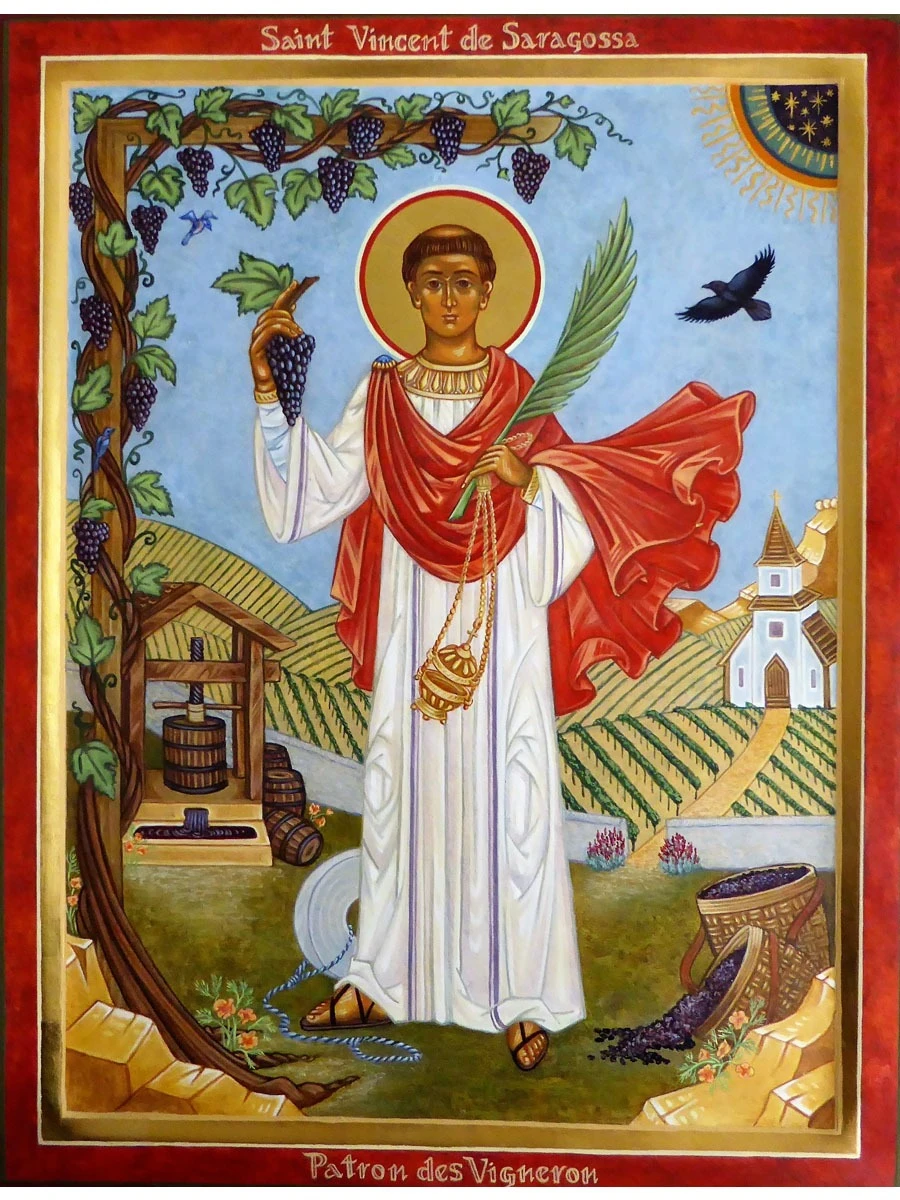
Bright reds are for martyrs who may also hold a palm leaf or the object of their martyrdom such as axes, crosses or stones.